Research Engineer · IUT EEE · ML Researcher
Assistant Engineer, PRAN Agro Limited · Bangladesh
Kayes Bin Yousuf
I am a Research Engineer and ML Researcher from Islamic University of Technology (IUT), specializing in physics-informed neural architectures, solar energy forecasting, motor control AI, and electricity market analytics - bridging theoretical ML with industrial constraints.
As an Assistant Engineer at PRAN-RFL Group, I independently deployed 8 Industry 4.0 automation projects - from PLC-HMI fire alarm systems to web-integrated OEE monitoring - achieving 2+ years of zero breakdown performance.
On the research side, I have 4 papers (1 published in Elsevier, 3 ongoing) in solar forecasting, PMSM torque estimation, PV fault detection, and European energy markets. I serve as a peer reviewer for Elsevier's Computers & Electrical Engineering (IF 4.9) — verified on ORCID.
I founded Electrical Engineering Solution - a YouTube channel with 31,000+ subscribers , covering 80% of the EEE syllabus for major Bangladeshi universities.
My goal is to develop trustworthy and deployment-ready AI systems that remain reliable under uncertainty and distribution shift - for energy systems, biometrics, and industrial automation where unreliable predictions carry real consequences.
ML models that maintain reliable performance under distribution shift and adversarial conditions.
Privacy-preserving distributed learning across decentralized data without compromising quality.
Calibration-aware prediction systems that provide reliable confidence estimates for critical decisions.
Interpretable models providing transparent reasoning for high-stakes applications.
Data-driven forecasting and analysis of solar, wind and electricity market dynamics.
Deepfake detection and speaker verification using robust deep learning architectures.
Energy Reports · Elsevier · Published 2026 · IF 5.1
Physics-informed framework coupling XGBoost (feature learning) with LSTM (residual correction). Achieved 93.4% prediction accuracy (2.57 kWh RMSE) on the UNISOLAR dataset, with a 72.1% improvement over persistence baselines. Integrated conformal prediction for calibrated uncertainty (93% coverage at 95% confidence).
IEEE Access · Under Review · IF 3.6
Introduces PIRL-Net, a residual learning framework that estimates torque from standard ADC measurements - no oscilloscope required. Achieved 4.06% RMS error at 120 rpm and 3.73% RMS in zero-shot transfer to 2000 rpm, surpassing online RLS baselines by 5 percentage points. First architecture to simultaneously satisfy online inference, full speed range operation, and cross-speed generalization for automotive-grade PMSMs.
Applied Energy · Elsevier · Working Paper · IF 11.2
Audited the widely-used DS1 benchmark, identifying 25.5% duplicate images and 1,248 cross-split contaminations. Introduced PV-Clean4 (10,129 clean images). A DenseNet-CBAM-DH model achieved 96.76% accuracy and reduced Expected Calibration Error by 62.9% via temperature scaling. Supervised domain adaptation improved target-domain accuracy from 67% to 82%.
Energy Economics · Elsevier · Working Paper · IF 14.2
Five-year (2021–2025) econometric and ML analysis of Germany and Spain using 87,000+ hourly ENTSO-E observations. Quantifies the merit-order effect (€127–411/MWh per RE unit), duck curve evolution (13.9 GW/h ramp in DE by 2025), and cross-border arbitrage potential (~€1,090M). Ridge regression achieved R²≈0.93 with conformal prediction providing sharp uncertainty intervals.
Research Philosophy
"My work operates at the intersection of physical fidelity and data-driven pragmatism. Whether estimating torque in a saturated PMSM or forecasting solar yield under cloud cover, the goal is the same: embed domain physics into learning architectures to achieve generalization that pure black-box models cannot. The future of industrial AI lies not in larger models, but in smarter residuals and contamination-free validation."
Machine Learning
Research & Analytics
Programming
Industrial Automation
January 2025 - PRESENT
Independent Researcher
Renewable Energy AI · Trustworthy ML · Biometric Security
Publishing research across three domains targeting high-impact journals. Reviewer for Computers & Electrical Engineering (Elsevier, IF 4.9) — 2 reviews completed (March–May 2026). View ORCID Profile
November 2021 - Present
Assistant Engineer
PRAN Agro Limited · BSCIC, Sopura, Rajshahi
Designed and deployed 8 industrial automation systems including PLC-HMI fire alarms, VFD retrofits, WTP automation, and Industry 4.0 OEE monitoring.
February 2019 - October 2021
Digital Marketing Executive
Shova Advanced Technologies Limited · Bangladesh
Led website development initiatives and data-driven SEO campaigns, improving online visibility, search rankings, and customer acquisition while strengthening the company's digital presence.
January 2015 - November 2018
B.Sc. Electrical & Electronic Engineering
Islamic University of Technology (IUT)
Active in projects and competition from 3rd year. Strong foundation in power systems, control theory, signal processing, and machine learning.
June 2021 - PRESENT
Founder & Technical Educator
Electrical Engineering Solution · YouTube · 31,000+ Subscribers
Built and scaled an Electrical Engineering learning platform through 100% organic growth, creating curriculum-aligned educational content covering 80% of the EEE syllabus for major Bangladeshi universities and translating complex engineering concepts into accessible learning resources.
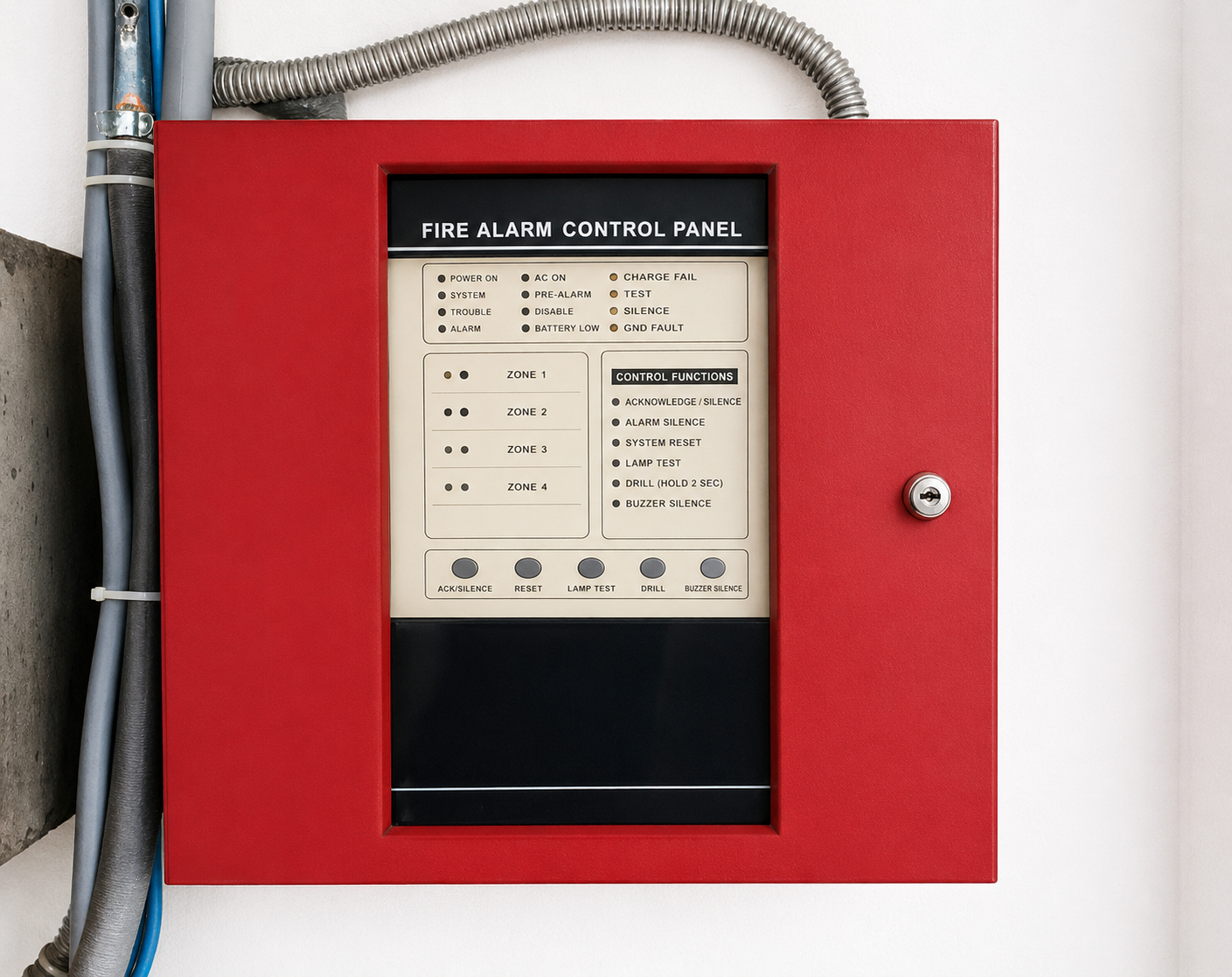
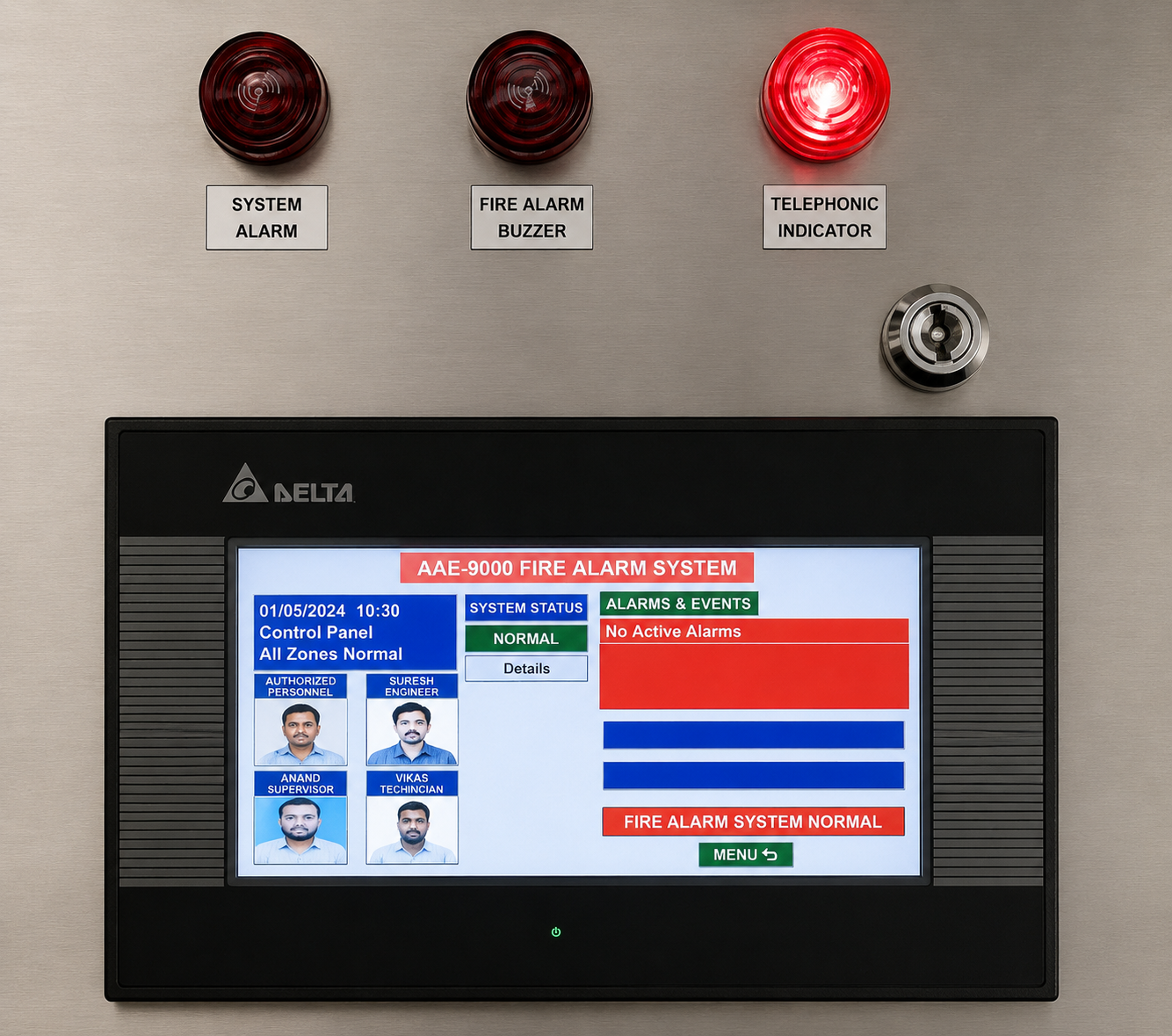
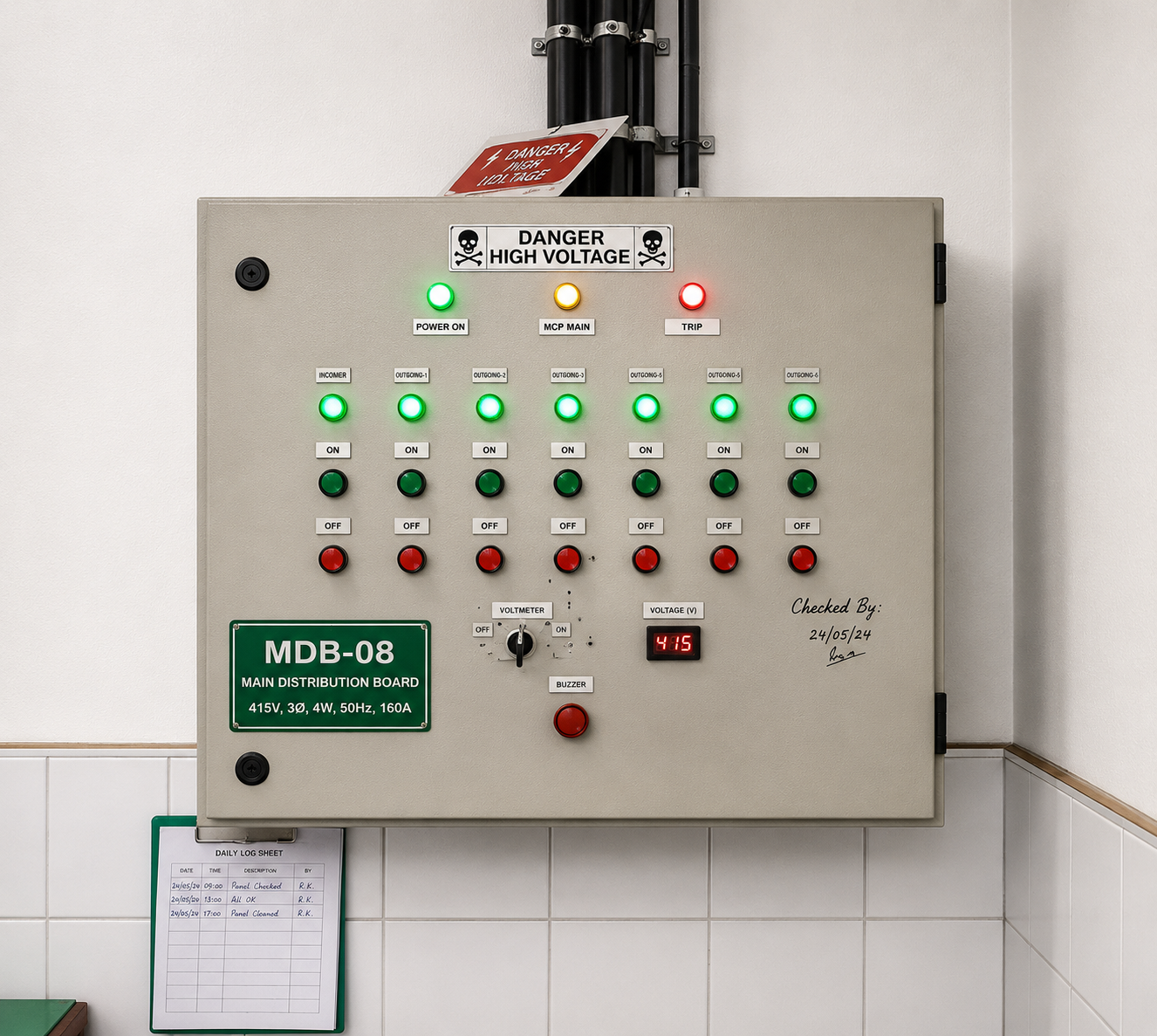
Traditional electronic circuit-based fire alarm systems were prone to frequent component failures and circuit breakdowns, causing operational downtime. External technicians had to be called for every fault - leading to high service costs and dependency on third-party support.
Independently designed and deployed an Addressable Fire Alarm Detection System using PLC and HMI. System has been running for over 2 years with zero breakdowns.
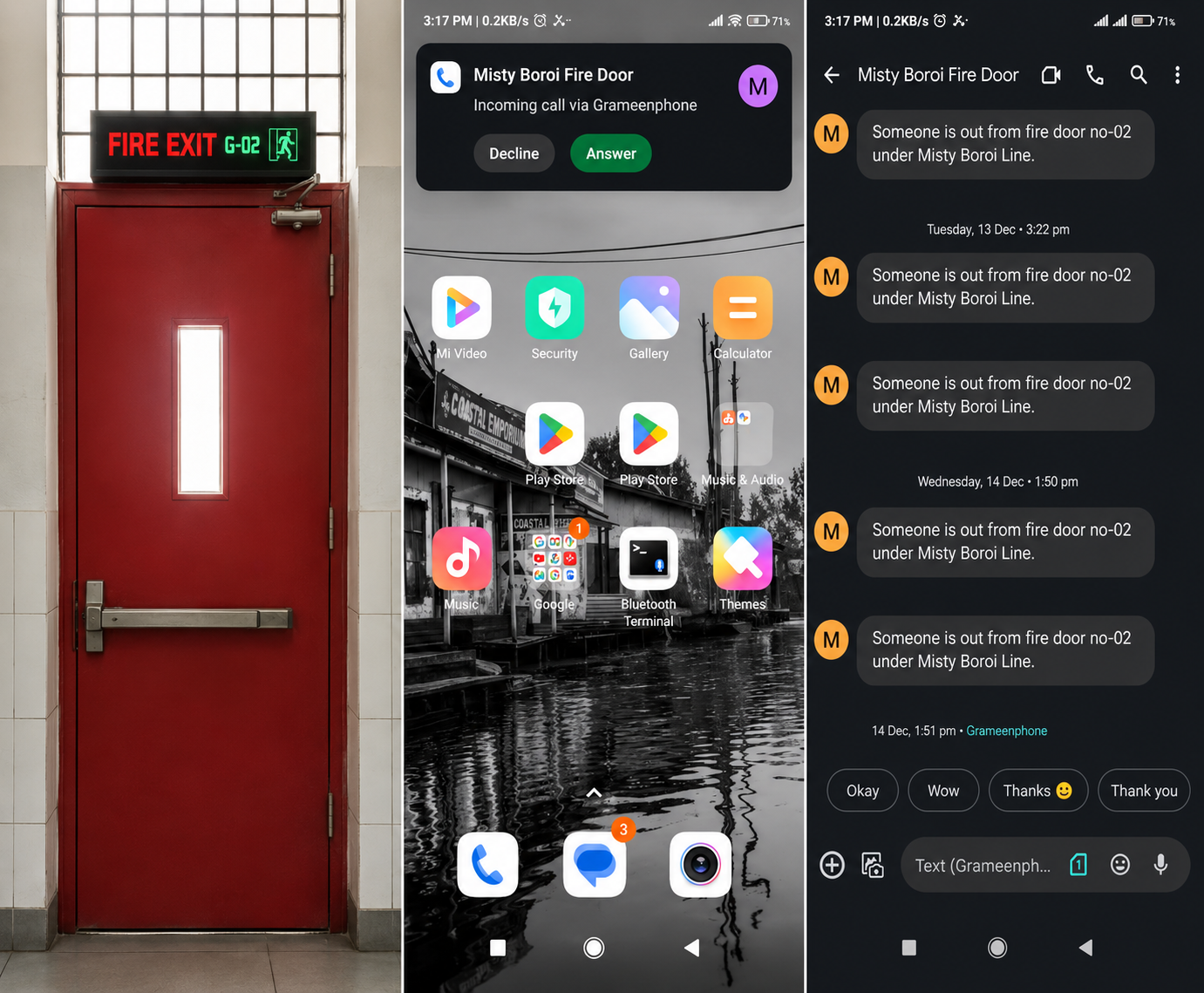
Fire exit doors posed a significant security threat - unauthorized personnel could exploit these exits to smuggle products or escape without security checks. Traditional measures failed to prevent this in real-time.
When any fire exit door opens, IR sensors instantly trigger a phone call/SMS to factory head and security personnel. Alert timestamps correlate with CCTV footage for identification.
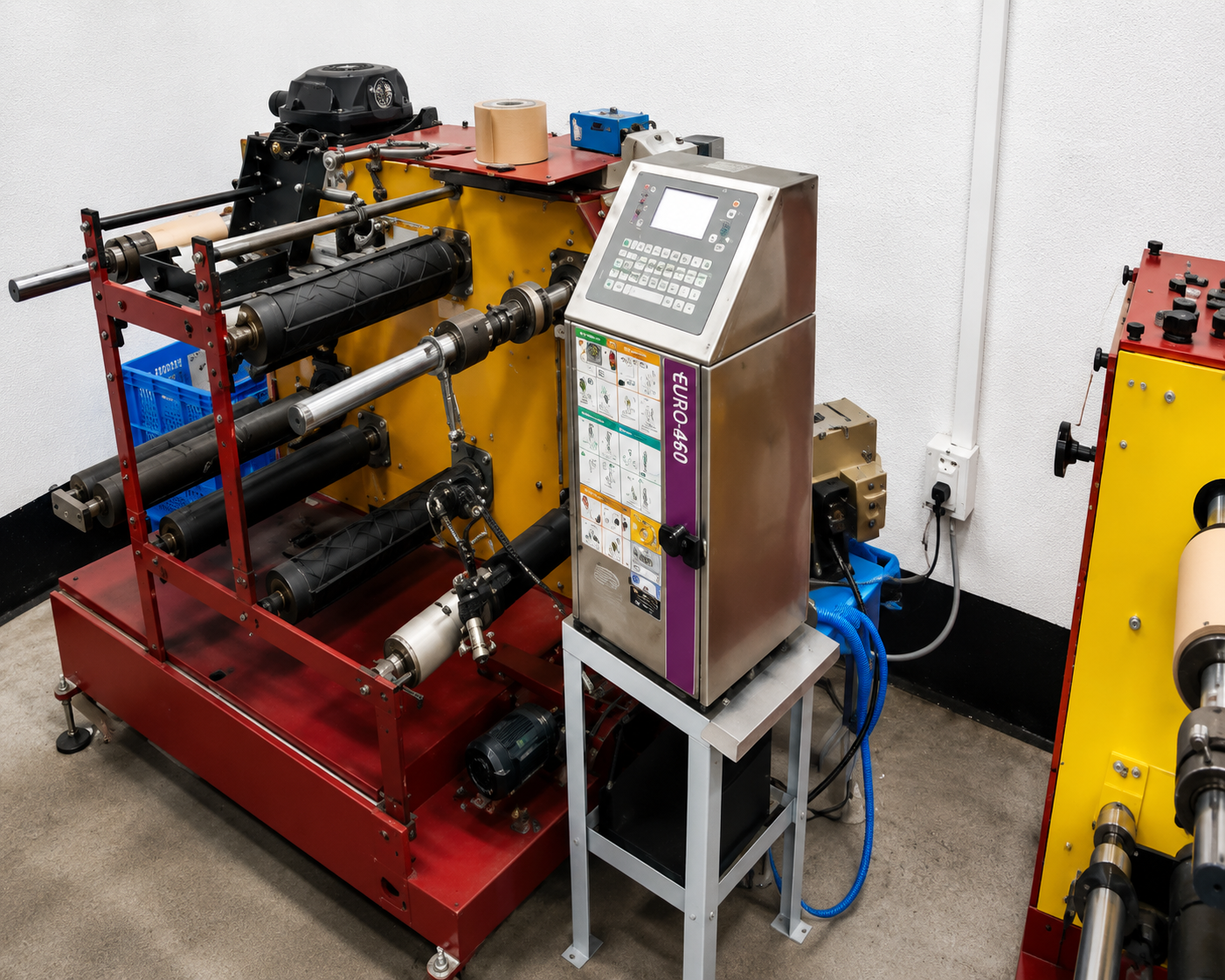
The existing DC motor with analog speed controller broke down every 2 months on average due to carbon brush wear, motor coil burns, fuse failures, and sensor inaccuracies. Each failure resulted in approximately 10 days of productivity loss.
Replaced DC motor with 3-phase induction motor. Installed Danfoss VFD for precise digital speed control. Integrated rotary encoder feedback. System has operated flawlessly for over 1 year with zero breakdowns.
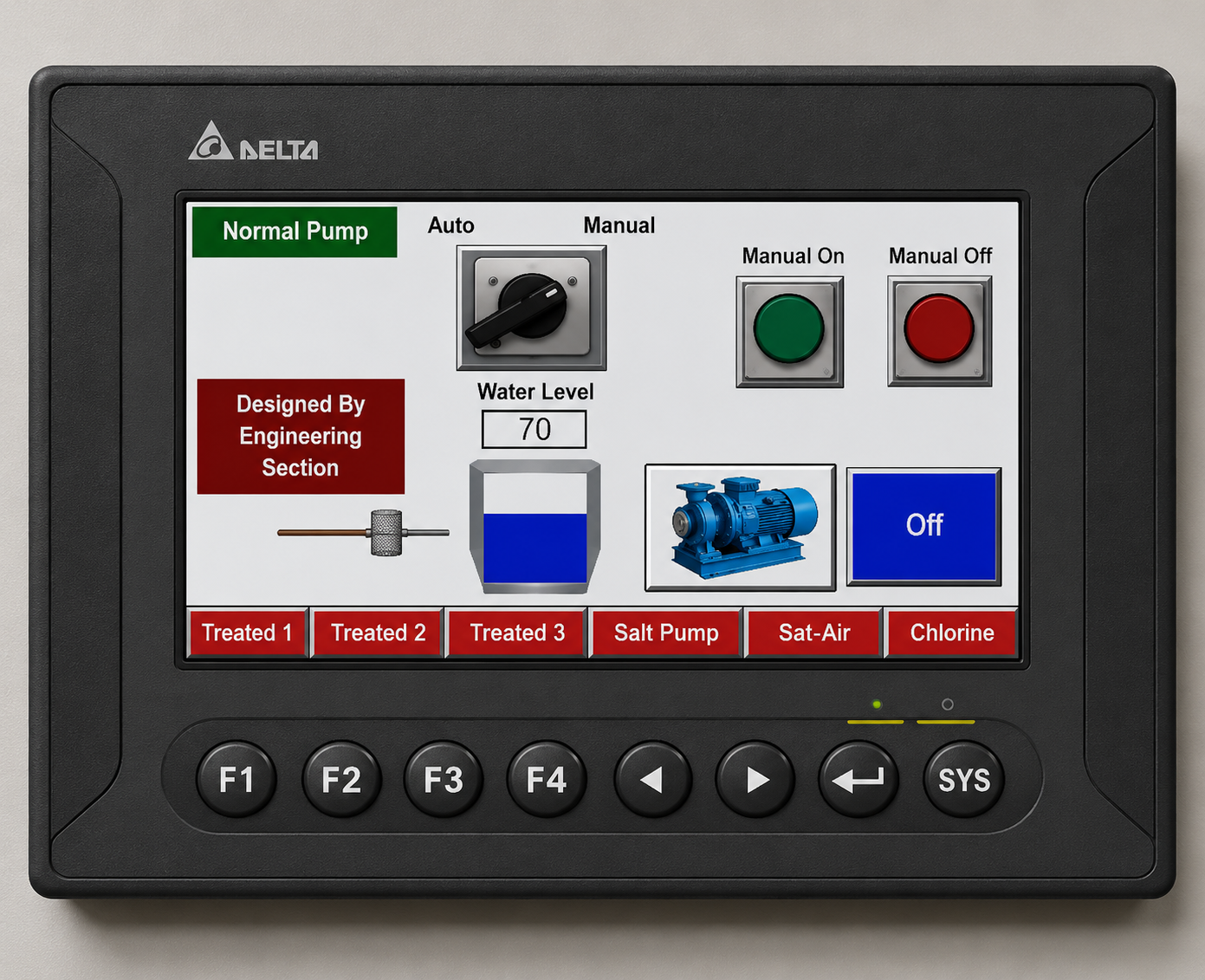
The WTP operated with an analog control system where all pumps were manually operated using physical push-button switches. No water level monitoring system existed, frequently causing tank overflows and operational inefficiencies.
Designed and implemented a fully automated control and monitoring system. Physical push buttons replaced by customized HMI controls with real-time water level monitoring and fail-safe functionality.
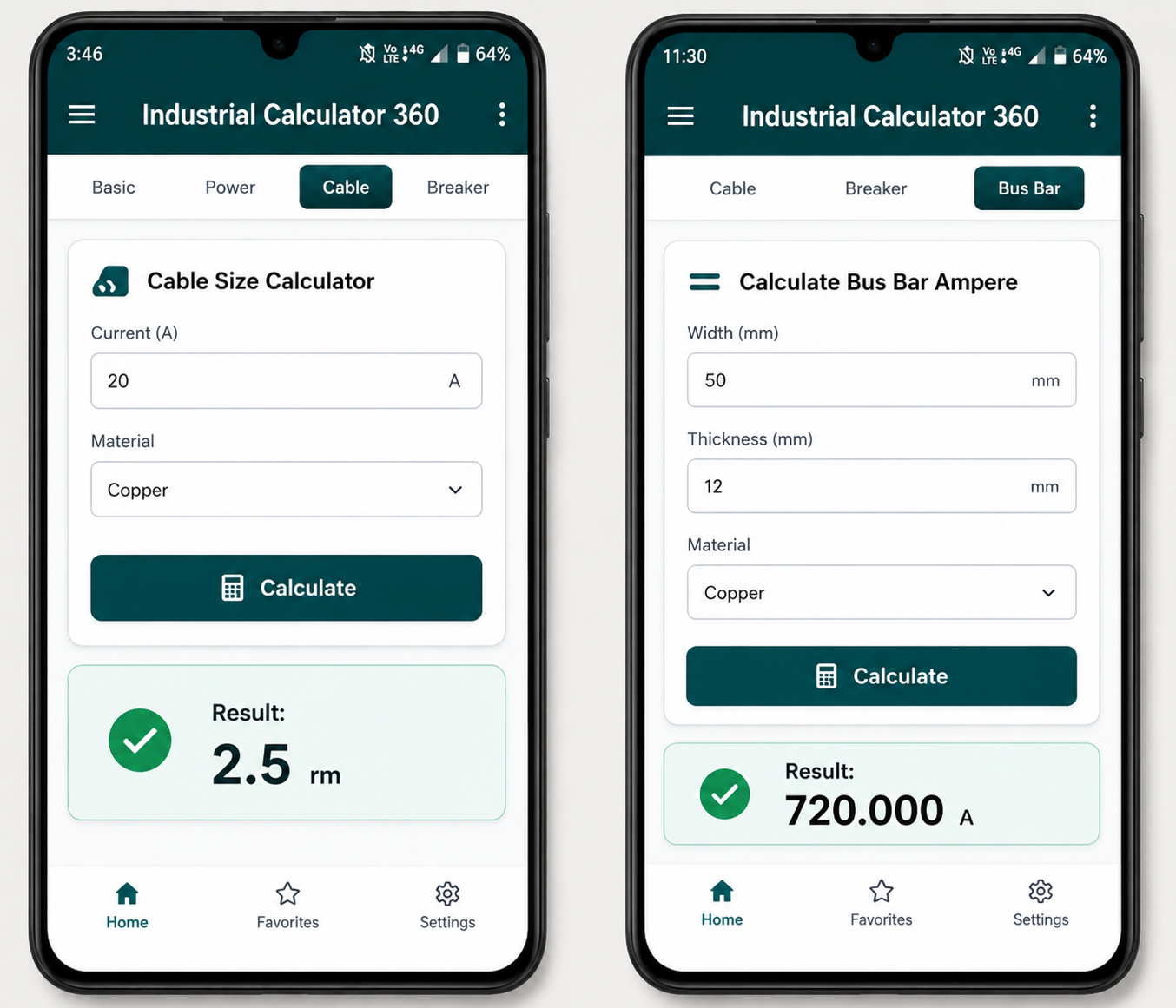
No dedicated engineering application was available to perform critical industrial calculations - breaker size, cable size, bus bar size, transformer selection, PFI selection, diesel generator fuel consumption, and electricity bill calculations - causing delays and inefficiencies.
Developed a comprehensive Web App with all essential industrial calculation modules in one centralized platform for the technical team.
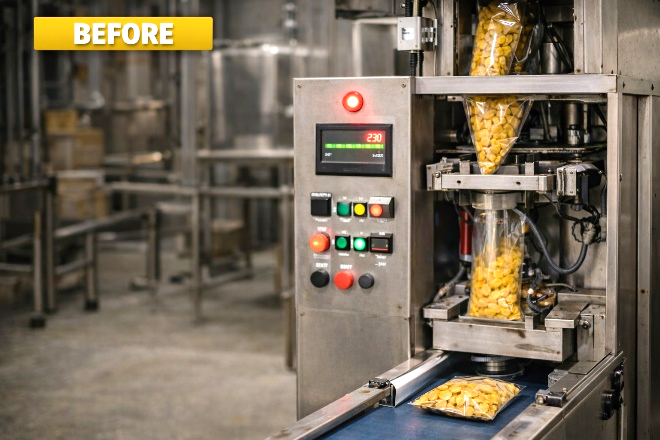
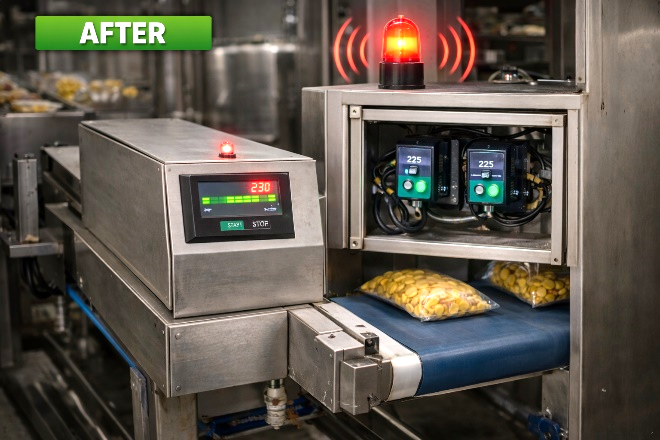
The existing metal detector on the Koreana packaging line provided only a visual indicator during metal contamination detection. Operators could easily miss the display signal during production, making contaminated packets difficult to identify and trace. Since the metal detector serves as a HACCP Critical Control Point (CCP), missed detections created significant food safety, compliance, and audit risks.
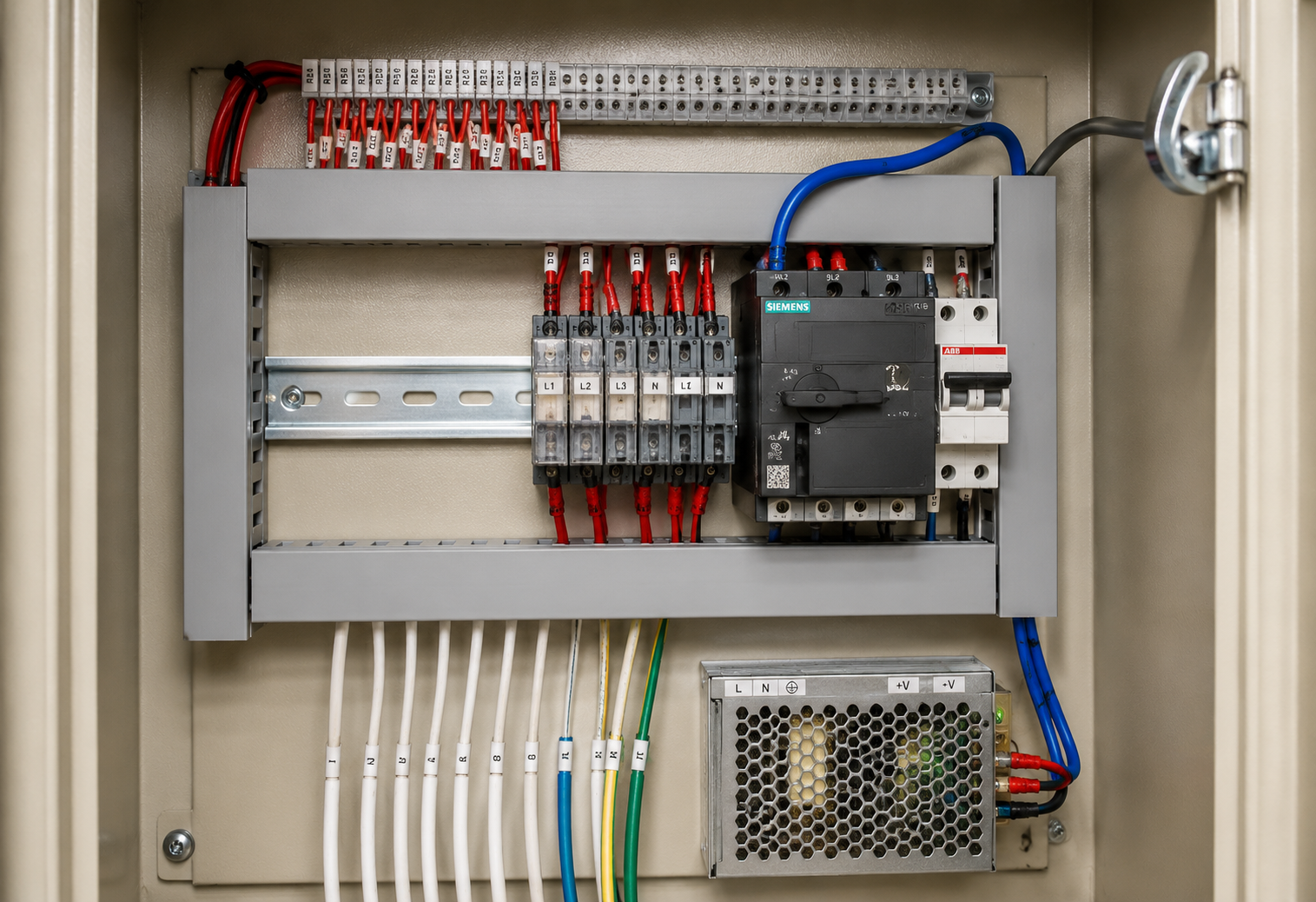
Analyzed the metal detector's indicator signal voltage and converted it into a functional control input. Implemented a relay-based interlock system using two DC 24V relays: one relay automatically stopped the packaging machine through the horizontal jaw control circuit, while the second relay activated an audible alarm. The solution enabled immediate response to contamination events without requiring external vendor support.
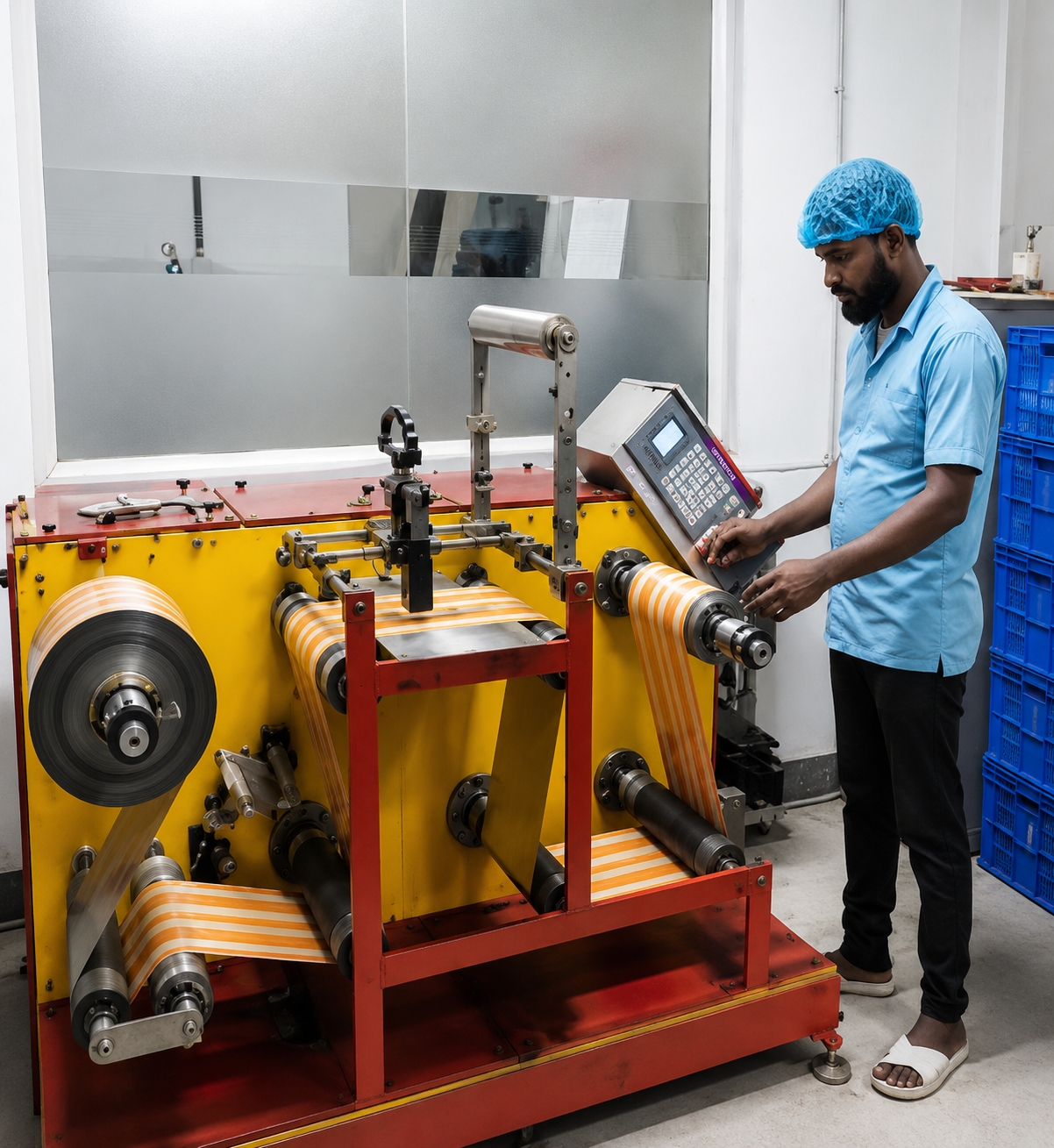
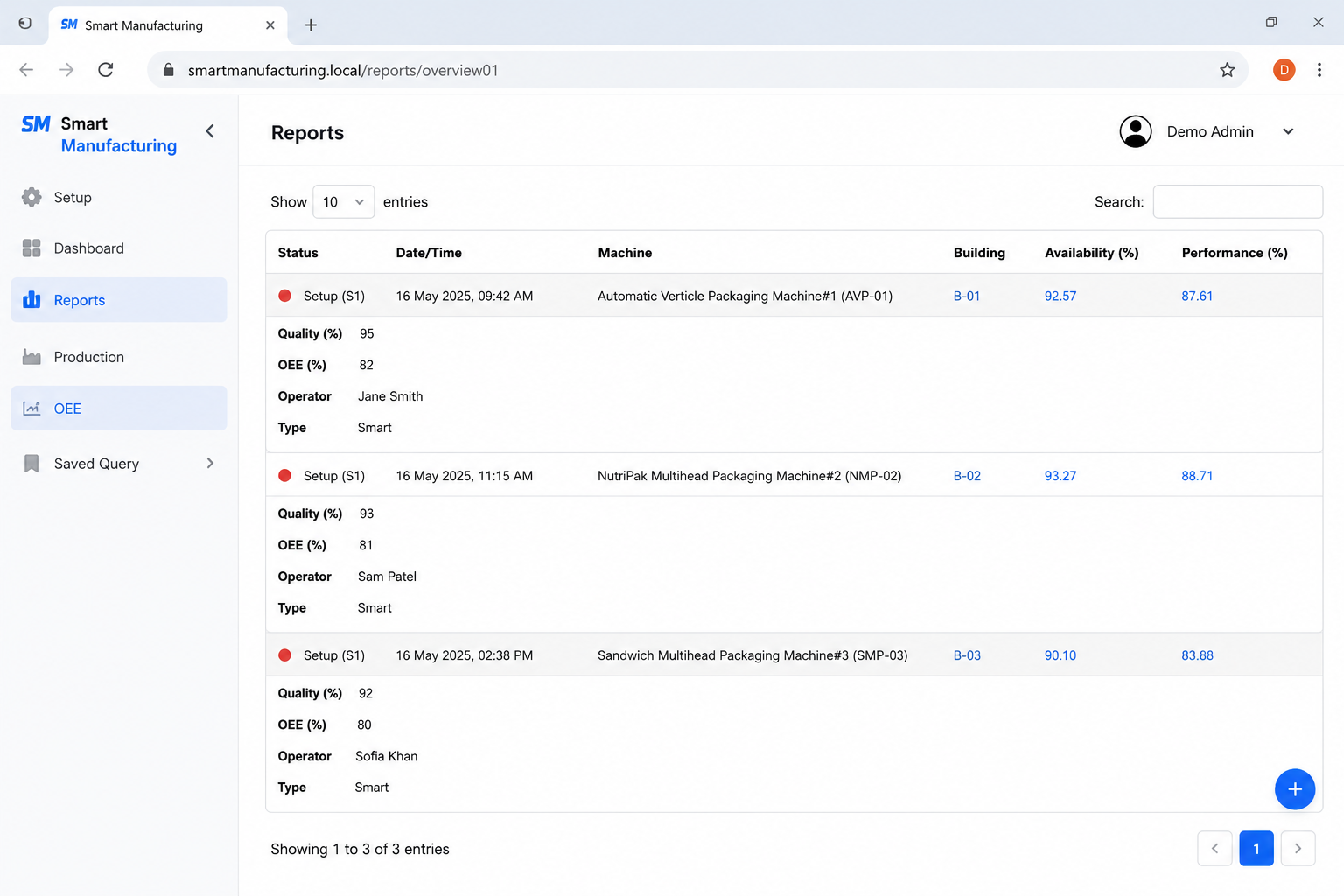
The factory faced challenges in accurately calculating Overall Equipment Effectiveness (OEE) due to lack of real-time machine data visibility. Machine speed, runtime, and non-productive time were either manually logged or unavailable altogether.
Integrated Siemens PLC with each packaging machine to count packet production. PLC data transmitted via internet to central server. Real-time data (Speed, Runtime, NPT) published on company website for authorized personnel.
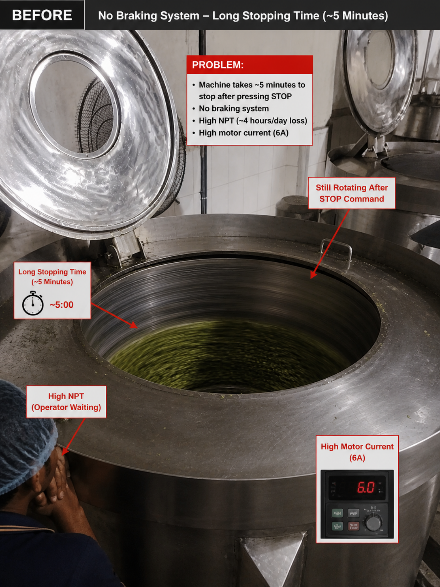
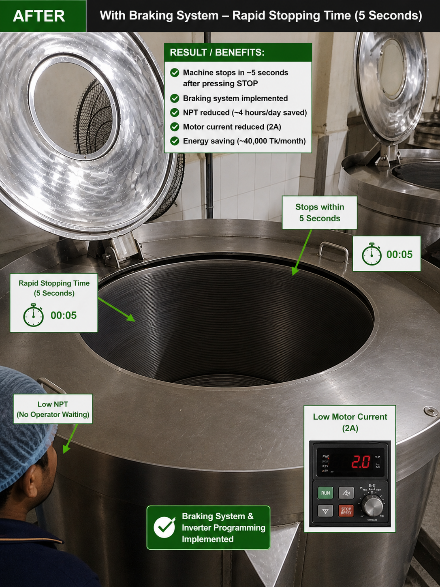
The Green Pea Centrifuge machine on the Koreana production line required approximately 5 minutes to come to a complete stop after shutdown. The prolonged coast-down period increased non-productive time (NPT), delayed operational activities, and reduced overall production efficiency. The machine also operated with relatively high motor current consumption of approximately 6A.
Led the development and implementation of a customized motor braking solution through inverter (VFD) programming and control parameter optimization. After extensive testing and tuning, the system was commissioned successfully and program access was secured to prevent unauthorized modifications. Major technical challenges related to braking performance and system stability were solved collaboratively with a core engineering teammate while coordinating the overall project execution.